Cast Iron Guide: Choosing, Seasoning and Caring for Your Pan

Cast iron is a durable, heat-retaining cookware material that, with regular seasoning and proper drying, can last for generations. A good pan or pot will sear steak, bake bread and simmer a slow stew, and it improves with use rather than wearing out. This guide covers how to choose the right piece, how to season it, how to clean it without causing rust, and how cast iron fits into South African cooking, from the kitchen stove to the braai.
What Makes Cast Iron Different From Other Cookware?
Cast iron is made by pouring molten iron into a mould, which produces a thick, heavy piece that holds heat far longer than thin steel or aluminium. That mass is the whole appeal. Once it is hot, it stays hot, so food keeps searing even when you add cold ingredients.
There is a trade-off. According to Virginia Tech, cast iron heats less evenly than some other pan types, so you should preheat the entire cooking surface before adding food. The same source notes that cast iron retains heat longer and can give off more heat than other pan types, which means handles and rims need careful handling.
Bare Cast Iron and Enamelled Cast Iron
There are two main finishes, and they behave differently:
- Bare (seasoned) cast iron has a natural oil-polymerised coating. It is naturally low in stick once seasoned, goes on any heat source and can handle very high temperatures, but it needs regular oiling.
- Enamelled cast iron has a glass-like coating over the iron. It does not need seasoning, resists rust and suits acidic foods like tomato-based sauces, though the enamel can chip if knocked.
Many South African households keep both: a bare skillet for searing and a coated pot for stews.
Which One Is Better, Iron or Cast Iron?
Cast iron is generally the better choice for cookware, because plain wrought or sheet iron is thinner, warps more easily and does not hold heat as well. Cast iron's thickness gives steadier cooking, and its surface builds a protective seasoning layer over time. Carbon steel is the closest alternative: lighter and quicker to heat, but with less heat retention.
If you want a pan that handles a hard sear and then goes straight into the oven, cast iron is the stronger option. If weight is a concern, a lighter carbon steel pan may suit you better.
How to Choose a Cast Iron Pan or Pot
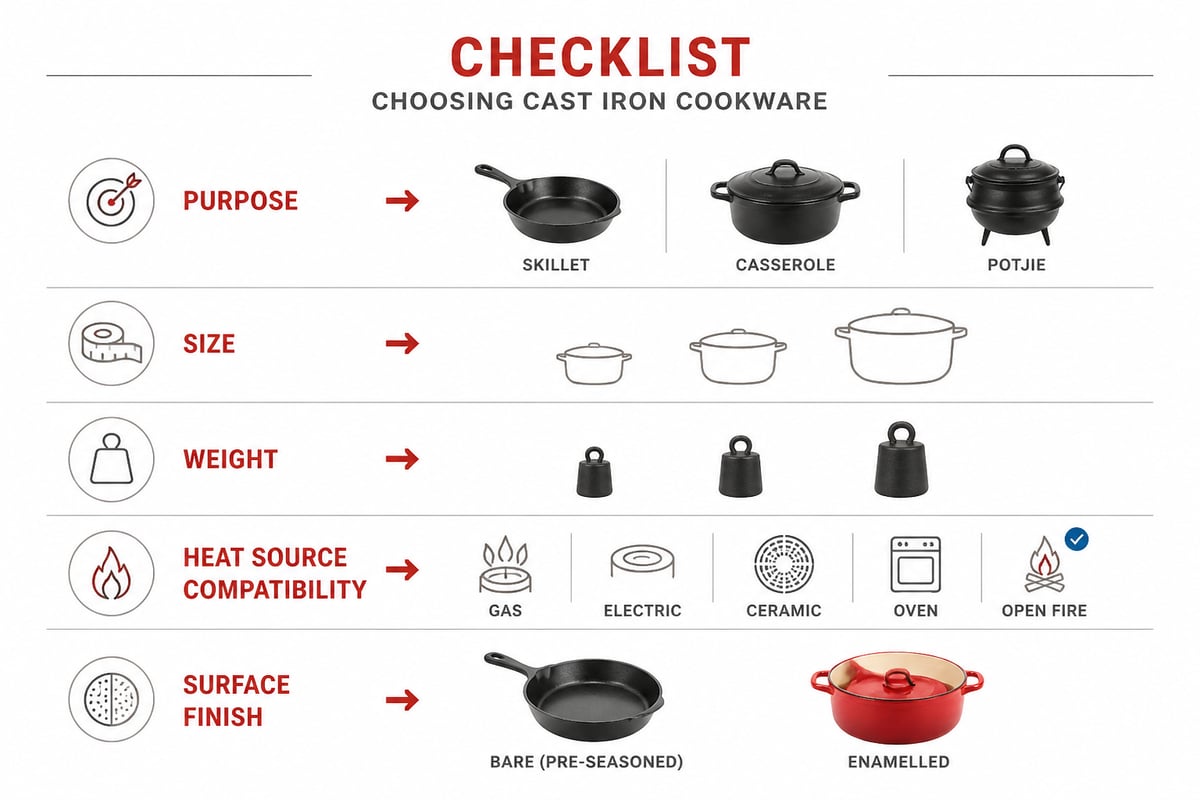
The right piece depends on what you cook most often, how many people you feed and what heat source you use. Start with the job, then check size, weight and finish.
Consider these points before buying:
- Purpose. A skillet suits steak, eggs and cornbread. A deep pot or casserole suits stews, curries and bread. A flat-bottomed potjie suits slow cooking over coals or a gas burner.
- Size. A 25 to 30 cm skillet suits most households. Larger pots serve a family or a gathering.
- Weight. A full pot of food in cast iron is heavy to lift. Look at handle design, and check you can comfortably manage it.
- Heat source. Bare cast iron works on gas, electric, induction, oven and open fire. Check that any coated piece is rated for your hob.
- Surface. A smooth interior is easier to season and clean. A rough, pebbly surface is common on older foundry pieces and can still work well, though it holds oil differently.
Cast Iron for the Braai and Potjiekos
South African cooking has a long relationship with cast iron. The three-legged potjie pot is central to potjiekos, a stew cooked slowly over coals, and flat-bottomed versions are made for gas, induction and oven use.
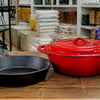
For readers who want one piece that does it all, the LK Flat Potjie Bake Pot 5L in red enamel (#12) is made from single-pour cast iron and has a stylish enamel finish. It works with fire, gas, oven or induction. It is stocked by Something From Home, a South African food store in New Zealand with more than 2,500 South African products.
The wider range of cast iron pots is also available through the cast iron pot collection.
Do You Need to Season New Cast Iron?
Many new pans do not need seasoning before their first use, though adding extra layers helps. Lodge states that its cast iron cookware is seasoned at the foundry and ready to use without additional seasoning before first use. Other makers, and older or second-hand pieces, may arrive bare or rusty and need a full seasoning from scratch.
Seasoning is simply oil baked onto the metal until it forms a hard, slick layer. Each time you cook with fat, that layer builds.
How to Season Cast Iron in the Oven
Follow these steps for a reliable base coat:
- Wash the pan with warm water, dry it fully and warm it briefly on the hob to drive off any remaining moisture.
- Wipe a very thin layer of oil over every surface, including the handle and underside. Then wipe it off as though you meant to remove it all; the residue left behind is enough.
- Place the pan upside down in the oven, with a tray on the lower rack to catch drips.
- Bake it. Lodge's oven instructions call for an oven temperature of 450 to 500°F, with the oiled pan baked upside down for 1 hour.
- Let it cool in the oven, and repeat for several coats if the pan is new or stripped.
Which Oil Is Best for Seasoning?
Choose an oil that polymerises into a hard film. Virginia Tech's expert notes that soybean or flaxseed oil can form a firm seasoning layer, and that coconut oil is less suitable. Whatever you use, apply it thinly. Thick coats turn sticky and uneven.
How Do You Clean Cast Iron Without Ruining It?
Clean cast iron by washing it briefly in warm water, drying it immediately and wiping on a thin film of oil. The old rule that soap ruins a pan no longer holds. Virginia Tech confirms that a properly seasoned pan can be washed with warm water and soap if needed, as long as you dry it thoroughly and rub it with oil afterwards.
A simple routine after cooking:
- Scrape out food while the pan is still warm, not hot.
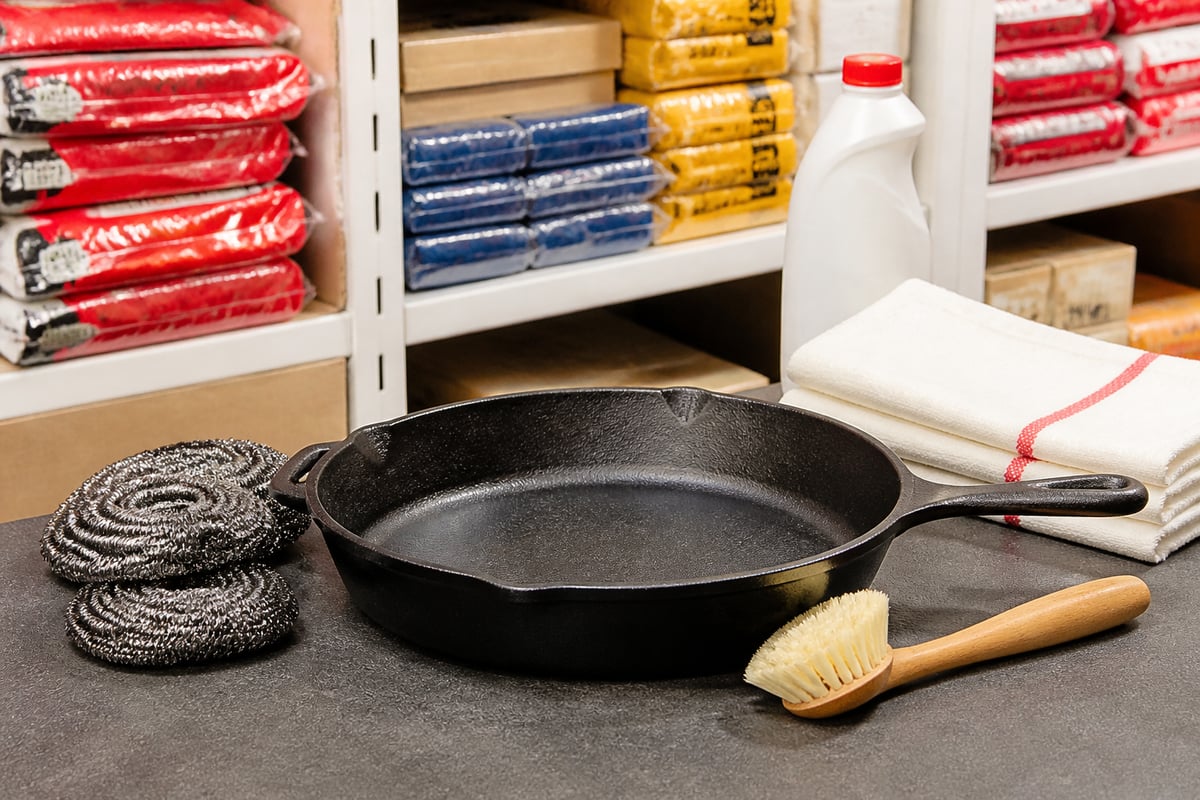
- Wash with a soft brush or sponge and a little soap if needed.
- Dry straight away with a cloth, then warm the pan on low heat for a minute to evaporate leftover moisture.
- Rub in a few drops of oil with a paper towel and let it cool.
For stubborn residue or a pan that needs restoring, the Wirecutter guide to cleaning a cast iron skillet covers drying, oiling and oven reseasoning in practical detail.
Can You Put Cast Iron in the Dishwasher?
No, cast iron should not go in the dishwasher. Long exposure to water, detergent and steam strips the seasoning and invites rust within a single cycle. Enamelled pieces are sometimes labelled dishwasher-safe, but hand washing protects the enamel and is the safer habit for any heavy pot.
How Do You Prevent Rust on Cast Iron?
The way to prevent rust on cast iron is to keep it dry and keep the seasoning layer intact. Rust forms when bare iron meets moisture, so most problems come from air drying, soaking or storing a pan while damp.
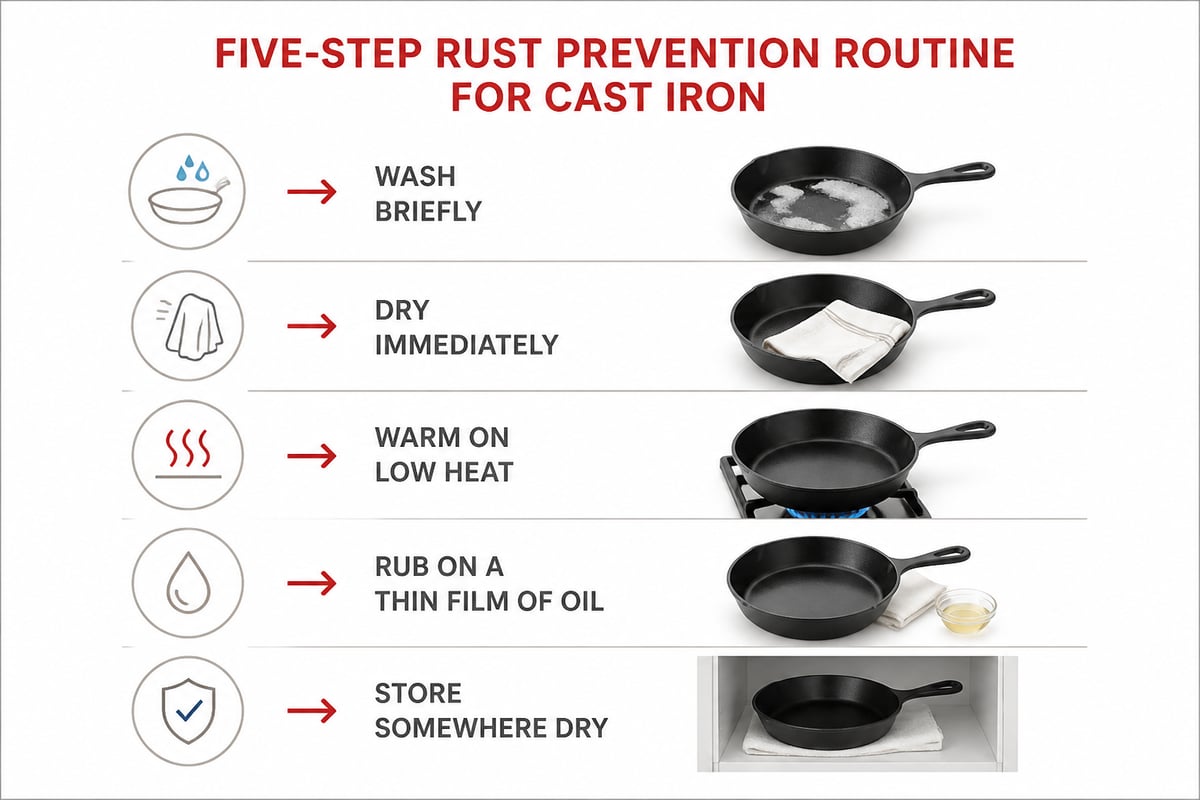
Practical habits that make the biggest difference:
- Never soak the pan or leave it in the sink.
- Dry immediately, then heat it briefly to remove moisture from the pores of the metal.
- Oil lightly after each wash.
- Store dry, ideally with a paper towel inside to absorb humidity. This matters in coastal Auckland, where damp air can creep into cupboards.
- Avoid long simmering of acidic foods in bare iron, as it can thin the seasoning.
What to Do If Rust Appears
Light rust is not the end of the pan. Scrub the rusty patch with a stiff brush or fine steel wool, rinse, dry fully and reseason it in the oven. Heavy rust on a second-hand pan may need several rounds, but the iron underneath is usually sound.
Is Cast Iron Good for Steak?
Yes, cast iron is one of the best surfaces for steak, because it holds enough heat to build a deep, even crust. The thick base recovers quickly when a cold steak hits the surface, which thin pans cannot match.
For a good result:
- Preheat the pan for several minutes until the whole surface is hot, in line with Virginia Tech's advice on preheating.
- Pat the steak dry and season it generously.
- Use an oil with a high smoke point, and avoid moving the meat until a crust forms.
- Rest the steak after cooking.
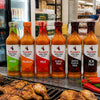
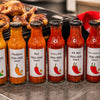
The same pan then works for the rest of a South African meal, whether that is pap on the side or a pan of chakalaka. For a braai-style flavour, many cooks finish steak in the pan with a splash of their favourite sauce, such as Steers Rave sauce, or rub the meat with blends from the Cape herb and spice range.
Why South Africans Abroad Still Reach for Cast Iron
Cast iron connects directly to South African food culture. Potjiekos on a Sunday, rusks baked in a heavy tin, mealie bread in a pot on the coals: these are dishes tied to family gatherings, camping trips and the braai. For South Africans living in New Zealand, cooking them in the same type of pot is one way to keep that routine going.
Familiar tools and ingredients go together. A potjie is most satisfying when the spices, sauces and sides on the table are the ones you grew up with. Something From Home, a South African shop and warehouse in New Zealand, stocks authentic South African brands across groceries, snacks, braai gear and home goods, and ships online across New Zealand and Australia. Its braai accessories collection sits alongside the cookware, so one order can cover the pot, the tools and the pantry staples. For a broader look at the cookware itself, the shop's own cast iron cookware article is a useful companion read.
FAQ
Can you cook acidic food like tomato in cast iron?
You can, but bare cast iron is better suited to short cooking times with acidic food. Long simmering can wear down the seasoning and give a metallic taste. Enamelled cast iron handles tomato-based stews, curries and sauces without any issue.
How often should you reseason cast iron?
Reseason whenever food starts to stick, the surface looks dull or grey, or you see rust. With regular cooking in fat and a light oiling after washing, many pans need a full oven reseasoning only occasionally. A quick wipe of oil after each use keeps the layer building.
Is cast iron heavy to handle safely?
Cast iron is heavier than most cookware, and it stays very hot for a long time. Use dry oven gloves on handles and lids, and remember that the handle gets as hot as the pan. Let the pot cool fully on a heat-proof surface before washing it.
Start by checking your current pan or pot: if it looks dull or feels sticky, wash it, dry it properly and give it a fresh coat of seasoning this weekend. If you are ready for a new piece, such as the LK Flat Potjie Bake Pot 5L, Something From Home is a South African food store in New Zealand that keeps authentic cookware, braai gear and familiar pantry favourites in one place, with delivery across New Zealand and Australia. Browse the range and shop available now to get cooking.