South African Braai Briquettes in New Zealand: A Buyer's Guide

Briquettes are compressed blocks of charcoal that burn evenly and steadily, which makes them a reliable choice for a long South African braai in New Zealand. They hold a fairly consistent temperature over a long cook, light predictably and suit slow cooking of boerewors, chops, chicken and roast potatoes. This guide explains how they differ from lump charcoal, what to look for when buying, how to light and manage them, and how to keep your braai safe under New Zealand's fire rules.
What are briquettes, and why do braai fans use them?
Briquettes are made by pressing charcoal dust and a binder into uniform shapes, which gives a predictable burn that natural lumps cannot match. Because every piece is the same size and density, the heat output is easy to control from the first coal to the last.
For South Africans, a braai is a social event rather than a quick dinner. It can run from the first drink to the last cup of rooibos, so fuel that does not need constant attention is valuable. Many expats find that the braai helps a New Zealand backyard feel like home, and the right fuel is part of getting it right.
Common types you will see on shelves include:
- Charcoal briquettes: pressed from carbonised wood and a binder. Reliable, uniform and widely used.
- Sawdust briquettes: compressed wood waste, often used for heating and, in some cases, cooking.
- Coconut shell briquettes: dense and long burning, though less common for braai use in New Zealand.
Briquettes vs lump charcoal: which is better for a braai?
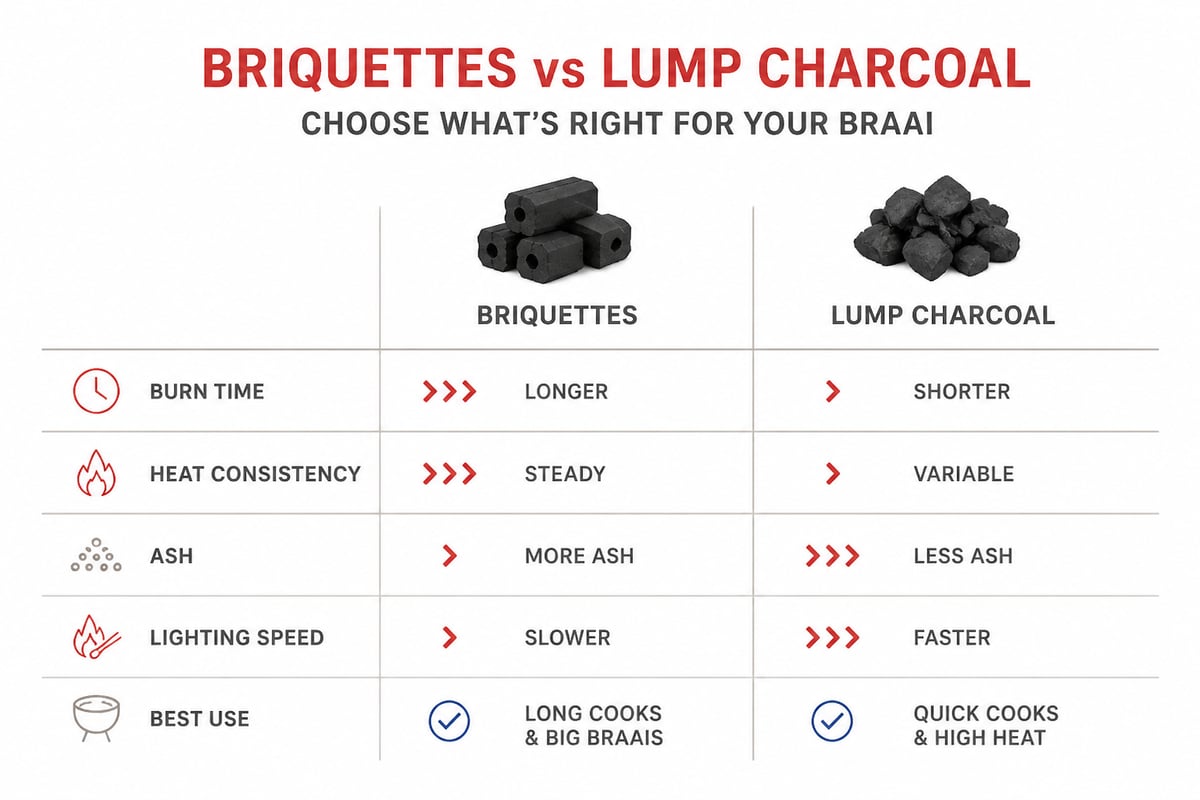
Neither is better in every situation: briquettes suit long, steady braais, while lump charcoal suits quick, high-heat cooking. The right choice depends on what is going on the grid and how long you plan to be outside.
| Feature | Briquettes | Lump charcoal |
|---|---|---|
| Burn time | Longer, steady | Shorter, variable |
| Heat consistency | Very even | Uneven, hotter peaks |
| Ash | More | Less |
| Lighting | Slower to catch | Catches quickly |
| Cost per braai | Usually lower | Usually higher |
| Best for | Slow cooking, long gatherings | Searing, quick cooks |
Briquettes win on predictability. If you are cooking a leg of lamb, a whole chicken or a full spread for a crowd, stable heat reduces the guesswork. Lump charcoal responds faster when you open the vents, so it suits steaks and a fast sear.
For a deeper comparison of lump charcoal vs briquettes and when each makes sense, see the Something From Home guide.
Is charcoal or briquettes better for a barbecue?
Briquettes are better when you want consistent heat over several hours, and lump charcoal is better when you want fast, intense heat. For the typical South African braai, where meat is cooked in stages and the fire is also a gathering point, briquettes are the safer all-rounder.
A practical approach used by many braai enthusiasts is to combine the two. Start with a layer of lump charcoal for quick ignition and a hot start, then add briquettes on top to carry the cook. This gives you the fast lighting of lump with the long, even burn of briquettes.
Which briquettes are best for a braai?
The best briquettes are the ones with a high carbon content, low filler and a clean, even burn that does not leave a chemical smell on the meat. Because quality varies widely, it helps to know what to check before you buy.
Look for these qualities:
- Low smoke and no chemical smell. Poorly made briquettes can taint food, especially delicate cuts.
- Uniform size. Even pieces light and burn together, which keeps the heat predictable.
- Minimal dust in the bag. Crumbled briquettes burn unevenly and waste fuel.
- Clear sourcing. Briquettes designed for braai use are the safest choice for cooking, as opposed to heating briquettes.
- A bag size that suits your braai habits. A 4kg bag is a manageable starting point for a standard kettle or drum braai.
For South Africans in New Zealand, a familiar option is Safari Premium Grade Briquettes in a 4kg bag, stocked at Something From Home. Many expats prefer sticking with fuel they know, because the burn behaviour is already familiar and the results at the braai are easier to repeat.
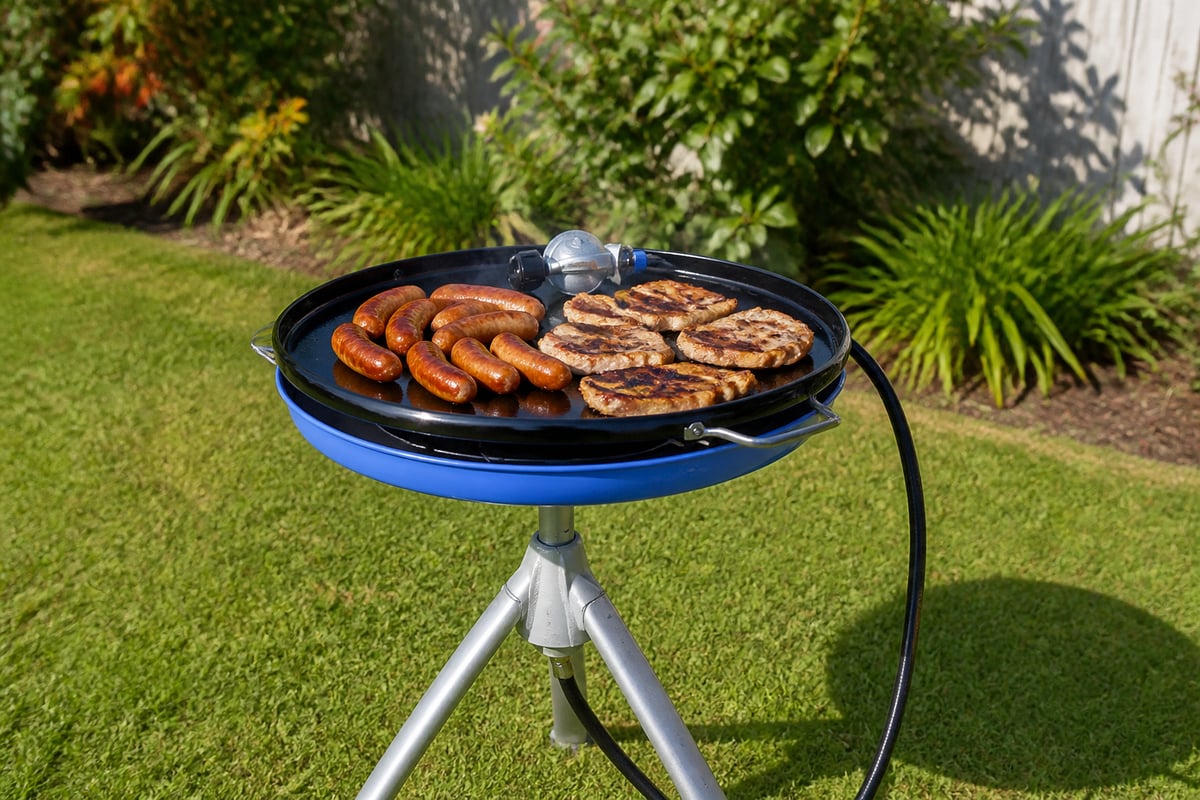
If you also want a backup for weeknights or for places where a charcoal fire is not allowed, the CADAC Gas Braai is a portable gas outdoor cooker with the traditional CADAC cooking surface. It is stocked by Something From Home alongside its wider range of CADAC products, and it suits campsites and picnics where charcoal is not an option, subject to the rules of your building and area.
How to light and manage briquettes for a South African braai
Briquettes light best in a chimney starter or a well-ventilated pyramid, and they need some time to reach cooking temperature. Patience at this stage determines how well the rest of the braai goes.
Follow these steps for a reliable fire:
- Build a pyramid or fill a chimney starter. Stack briquettes loosely so air can move through them.
- Light from the bottom. Use a natural firelighter rather than liquid accelerant, which can leave a taste on the food.
- Wait for a grey ash coating. When the outer surfaces turn ash-grey and the edges glow, the coals are ready.
- Spread the coals into zones. Pile them thickly on one side for direct heat and leave the other side thin or empty for indirect cooking.
- Adjust with vents. Opening vents feeds the fire, and closing them slows the burn.
Never add fresh briquettes to a fire that already has meat on the grid unless you allow them time to ash over first, as the early smoke can taste harsh.
Zones, timing and common braai foods
Setting up a two-zone fire makes most braai foods easier. Boerewors and thick sausages do well on moderate direct heat, finished with a rest off the flames. Chicken pieces start on the cooler side and finish over the coals for colour. Pap and sauce can sit in a pot at the edge, and a CADAC recipe book is a useful reference for expanding the menu beyond the classics.
For chicken and mince-based products, food safety matters as much as flavour. The Ministry for Primary Industries advises cooking chicken, tenderised meat and minced meat until piping hot throughout, with time-temperature options such as 75°C for 30 seconds, 70°C for 3 minutes or 65°C for 15 minutes. A probe thermometer takes the guesswork out of this, particularly with thick boerewors rings.
Braai safety rules for briquettes in New Zealand
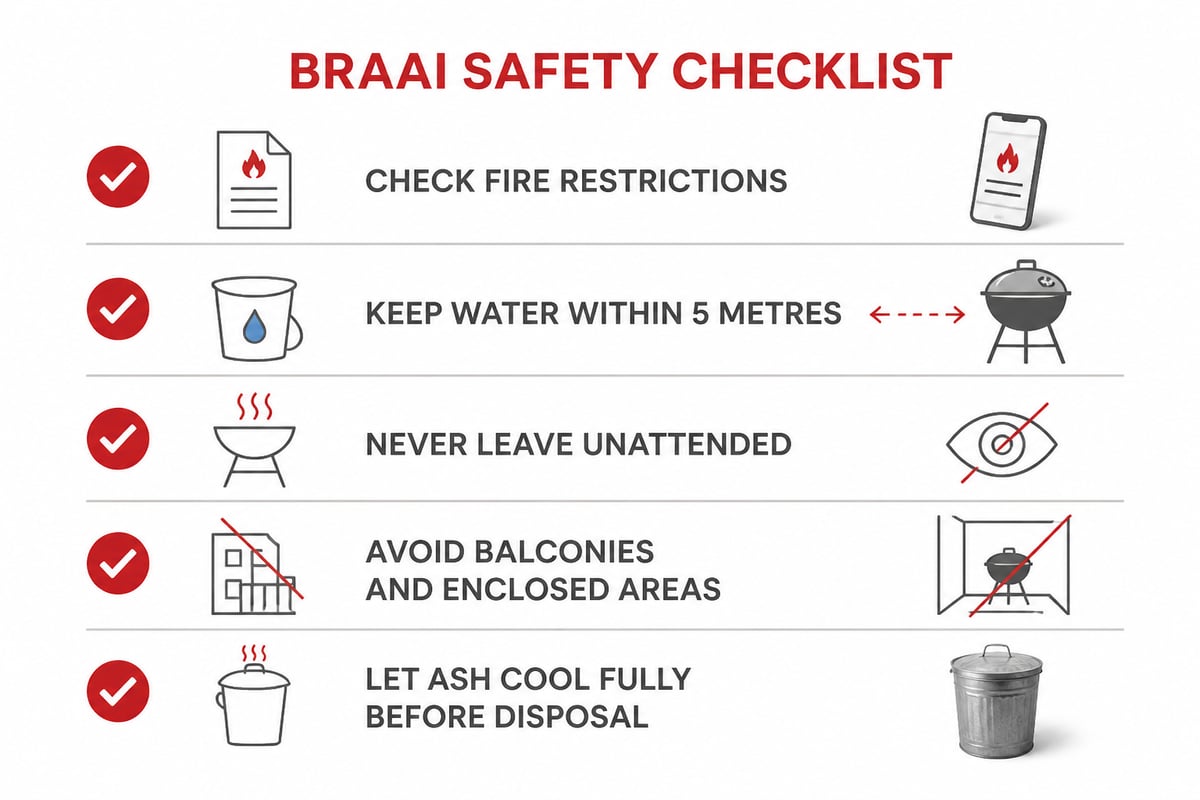
In New Zealand, a charcoal braai is an authorised fire type even in restricted fire seasons, but only if you meet the safety requirements. Fire and Emergency New Zealand sets out the conditions, and they apply whether you use briquettes or lump charcoal.
The key points to follow:
- Keep a way to extinguish the fire within 5 metres. A hose, a bucket of water or an extinguisher all qualify.
- Never leave a burning braai unattended. This applies even for a short trip inside.
- Do not use a charcoal braai on an apartment balcony, a deck, under a roof overhang or in any enclosed area. Burning charcoal in an enclosed space is dangerous, and sparks can ignite structures.
Check local restrictions before you light. Guidance on lighting fires safely covers checking restrictions, managing fire size and preventing a fire from spreading, which is sensible reading before any outdoor cook.
When the braai is finished, close the vents and let the coals burn out fully. If you must dispose of ash, wait until it is completely cold and then place it in a metal container. Warm ash is a common cause of rubbish bin fires.
Why South Africans in New Zealand look for familiar braai fuel
South Africans abroad tend to keep their braai habits intact, because the braai is as much about community as it is about food. When someone moves to New Zealand, the first long weekend often involves finding a braai stand, the right tongs and fuel that behaves the way they remember.
Familiar products reduce the learning curve. A fuel you know lights at the speed you expect, holds its heat for the length of time you expect and produces the flavour you associate with a proper braai. That is also why many expats turn to a South African shop for the rest of the braai table: boerewors and drywors casings, spice rubs, peppadews and sauces.
Something From Home is a South African food store in New Zealand with a wide range of South African products. You can browse the charcoal and briquettes collection alongside braai tools, spices and snacks, and order online for delivery across New Zealand, or visit the shop in Browns Bay, Auckland. The focus is on authentic South African brands.
Building a full braai order in one go
A braai needs more than fuel. Many customers combine briquettes with:
- Freddy Hirsch spices and braai products for seasoning
- Boerewors, drywors and casings for the main event
- Biltong to snack on while the coals ash over
Ordering these together saves multiple trips and makes it easier to plan ahead for a gathering.
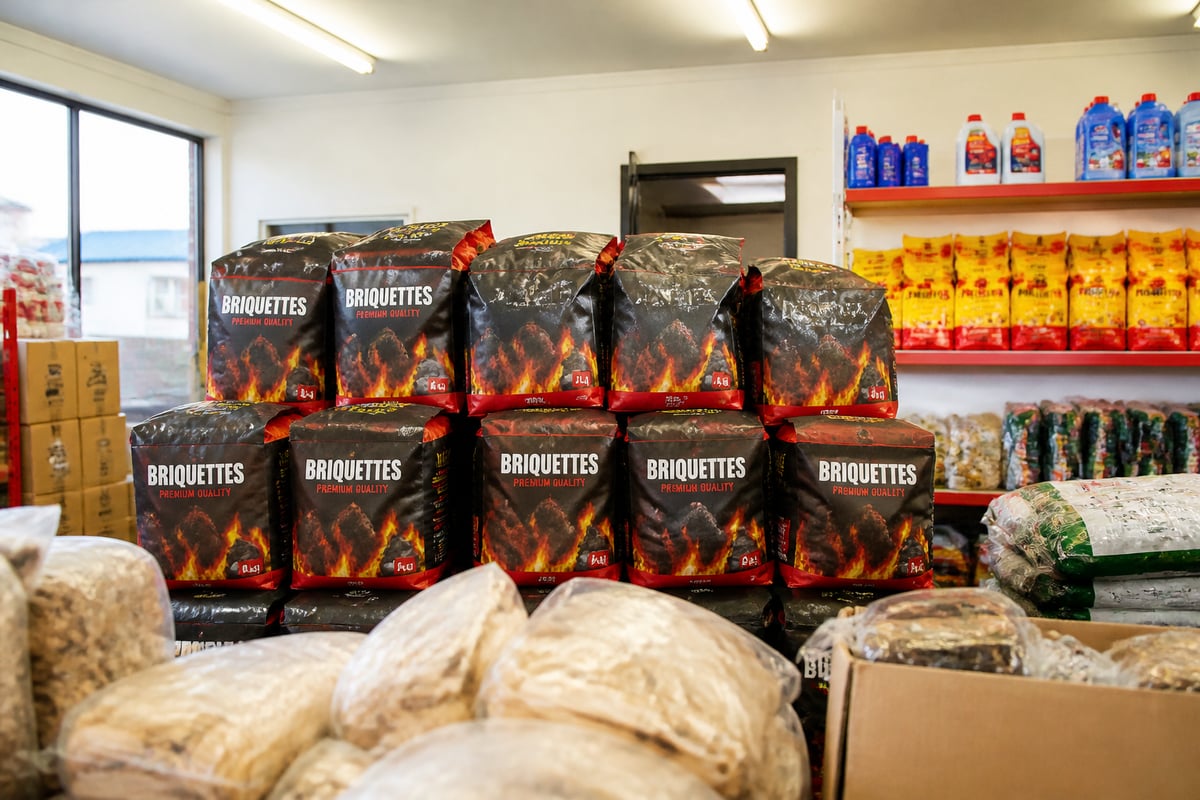
Are briquettes a profitable business?
A briquette business can be profitable, but the returns depend on raw material supply, production equipment and a reliable local market. In New Zealand, sawdust and wood-waste briquettes are produced for home heating, and charcoal briquettes for cooking are often bought mainly in warmer months.
Before committing, a prospective producer would need to consider feedstock costs, binder choice, drying and pressing equipment, packaging, and the logistics of getting product to buyers. Cooking briquettes also face quality expectations around smoke and taste that heating briquettes do not. Anyone exploring this seriously should seek advice from a business adviser and from existing producers rather than relying on general estimates.
Pellets or briquettes: which is better?
Pellets suit pellet grills and smokers that feed them automatically, while briquettes suit kettle and drum braais that are fuelled by hand. They are not interchangeable, so the better choice depends on your equipment.
Wood pellets burn quickly and are designed for flavour in controlled smoking appliances. Briquettes are designed for open-grid cooking and sustained heat. For a traditional South African braai on a kettle, drum or fixed braai, briquettes or charcoal are the practical choice, and pellets only make sense if you own a pellet-fed cooker.
FAQ
How long do briquettes last on a braai?
A load of quality briquettes can stay hot enough for cooking for a long time, depending on how many you use and how you manage the vents. For longer gatherings, add a small second batch once the first has ashed over, and give it time to catch before cooking over it.
Can I use briquettes on a gas braai?
No. Gas braais are designed to burn gas, and charcoal briquettes should only be used in equipment built for solid fuel. If you want a gas option alongside your charcoal setup, a portable gas cooker such as the CADAC gives you flexibility for places where charcoal is not suitable.
How should I store leftover briquettes?
Keep them in a dry, sealed container or in the original bag, away from damp. Moisture makes briquettes harder to light and causes them to crumble, so a covered shed or garage shelf works well.
Before your next braai, check your local fire restrictions and confirm that your cooking spot meets the 5-metre water and open-air requirements. Then stock up on fuel and everything that goes with it from Something From Home, a South African shop and warehouse in New Zealand with a wide range of South African groceries, snacks and braai supplies. If you also want a flexible backup cooker, the CADAC Gas Braai is worth a look. To plan your braai order, see what is Shop available now at Something From Home.