How to Make Biltong at Home: A Step-by-Step Guide
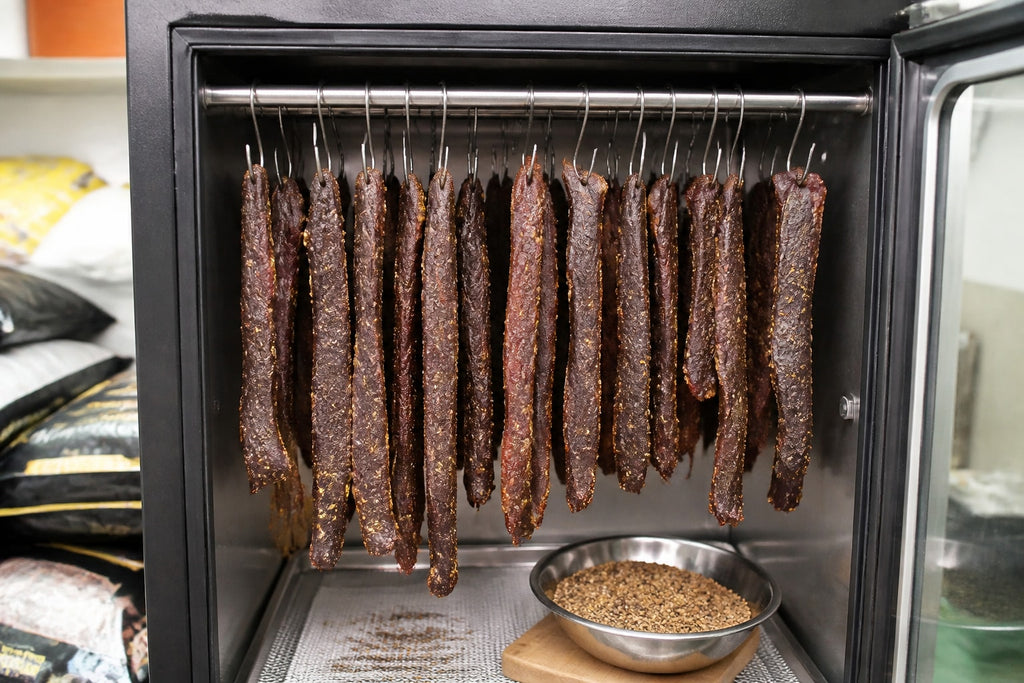
To make biltong, cut a lean beef roast into thick strips along the grain, cure them in vinegar, salt and a spice mix of coriander and black pepper, then hang them in a dry, ventilated space for four to seven days until firm but still slightly give. The process is simple, needs no cooking, and rewards patience far more than skill. This guide walks through each step, from picking the meat to storing the finished batch, with the safety points that matter for a New Zealand kitchen.
What Biltong Is and Why Home Makers Love It
Biltong is air-dried, cured beef from South Africa, seasoned mainly with coriander, black pepper, salt and vinegar, and it is dried without heat or smoke. That is what separates it from most jerky, which is usually cut thin, marinated in a wet sauce and dried with warmth.
For many South Africans in New Zealand, biltong is more than a snack. It is the thing handed around at a braai, packed for a road trip and posted in care parcels, and the flavour is hard to match with substitutes. Making it yourself gives you control over thickness, spice level and fat, and it is far cheaper per kilogram than buying ready-made.
Biltong vs Jerky: What Is the Difference?
The main differences are the cut, the cure and the drying method. Biltong is cut in thick strips, cured with vinegar and dry spice, and air-dried at room temperature. Jerky is cut in thin slices, often soaked in a wet marinade, and dried with low heat.
| Feature | Biltong | Jerky |
|---|---|---|
| Cut thickness | Thick strips, often around 2 cm | Thin slices |
| Cure | Vinegar, salt, coriander, pepper | Soy-based or sweet marinades |
| Drying | Air-dried, no heat | Low heat, dehydrator or oven |
| Texture | Soft to firm, can be sliced thin | Chewy and tough |
If you prefer a softer bite, biltong lets you stop drying earlier, which is not an option with thin jerky strips.
Is It Worth Making Your Own Biltong?
Yes, for most people who eat biltong regularly. A kilogram of raw beef gives a good yield of finished biltong, and the ingredients and a simple drying box are a one-off cost that is repaid over time. You also choose the cut, the fat cap and the spice, which is difficult to do with shop-bought packs.
The trade-off is time and attention. You need to check the drying box daily and accept that your first batch may be too wet or too dry. If you want to try before committing, you can browse ready-to-eat biltong to find the texture and flavour you like, then aim to match it at home.
What Cut of Beef Is Used to Make Biltong?
Silverside is the most common cut, followed by topside, rump and eye fillet for special batches. These are lean, whole muscles that slice cleanly along the grain and dry evenly.
- Silverside: the classic choice, lean with a firm grain and good value.
- Topside: slightly more tender, a good everyday option.
- Rump: richer flavour, usually with a fat cap many people enjoy.
- Eye fillet: very tender and expensive, best kept for a treat.
Ask your butcher for a whole piece rather than steak, and keep it cold until it goes into the cure. Trim away sinew and silverskin, but leave a thin layer of fat on one side if you like the flavour it adds. In New Zealand, grass-fed beef is easy to find and gives a clean, beefy result.
Ingredients and Equipment You Need
You need only a handful of ingredients and a few pieces of kit, and the spice mix is where South African brands save you time and guesswork.
Ingredients for about 1 kg of beef:
- Lean beef such as silverside, cut into thick strips
- Brown or spirit vinegar
- Coarse salt
- Roasted, crushed coriander seed and cracked black pepper
- A little brown sugar (optional)
Equipment:
- A sharp knife and a non-porous chopping board
- A non-reactive tub or large zip bag for curing
- Hooks or skewers to hang the meat
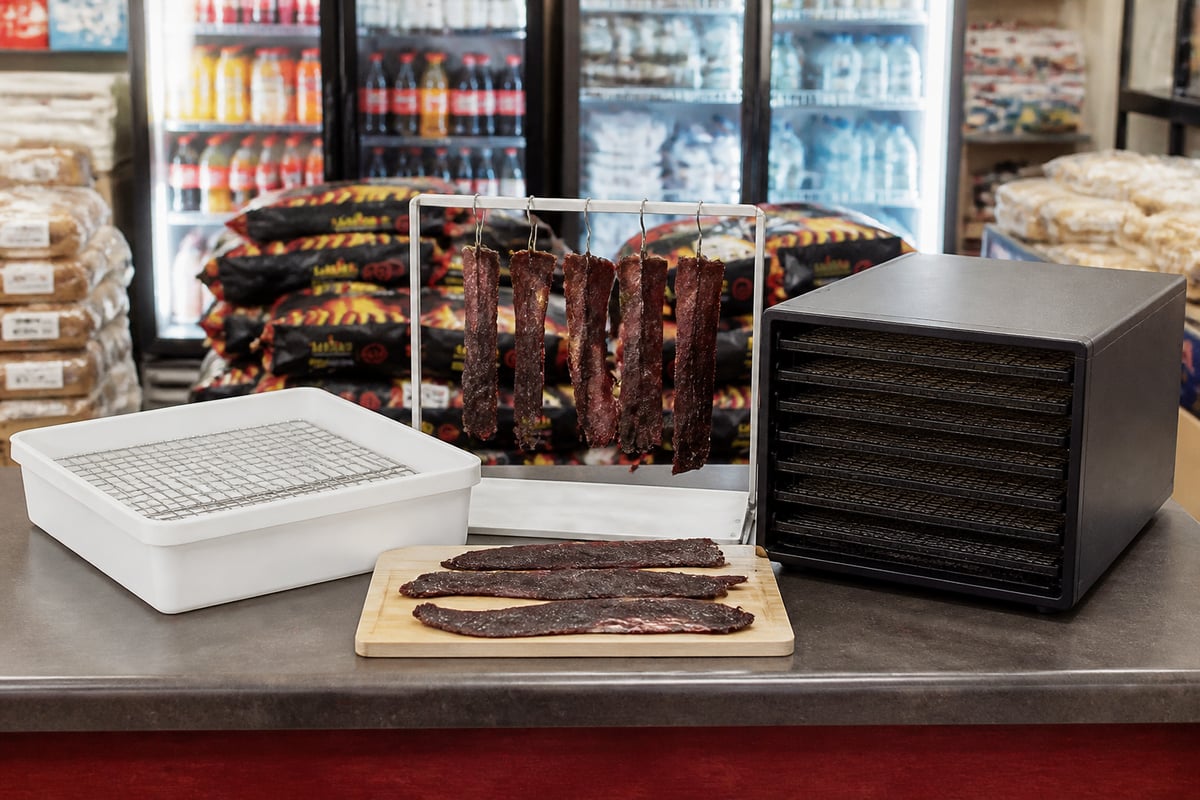
- A drying box with airflow, such as a ventilated cabinet or a purpose-built unit
- A small fan to keep air moving
Pre-mixed seasoning removes the guesswork. A pack such as Freddy Hirsch Hunters Biltong Seasoning combines coriander, salt, sucrose and black pepper in the familiar South African style. The 2 kg seasoning-only pack suits anyone planning several batches, and it is stocked at Something From Home, a South African food store in New Zealand with more than 2,500 South African products.
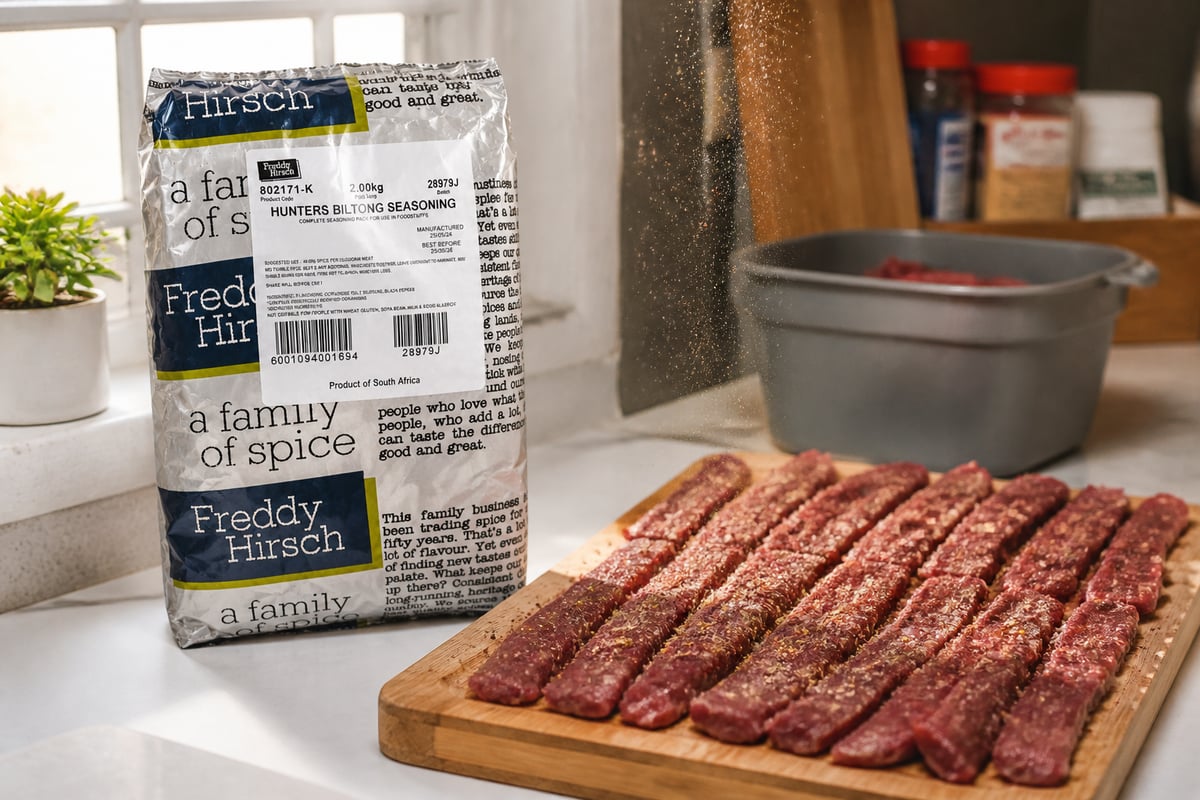
If you would rather buy everything in one go, the make your own biltong collection gathers spices, hooks and starter kits together, and the biltong hooks are a cheap way to hang strips evenly.
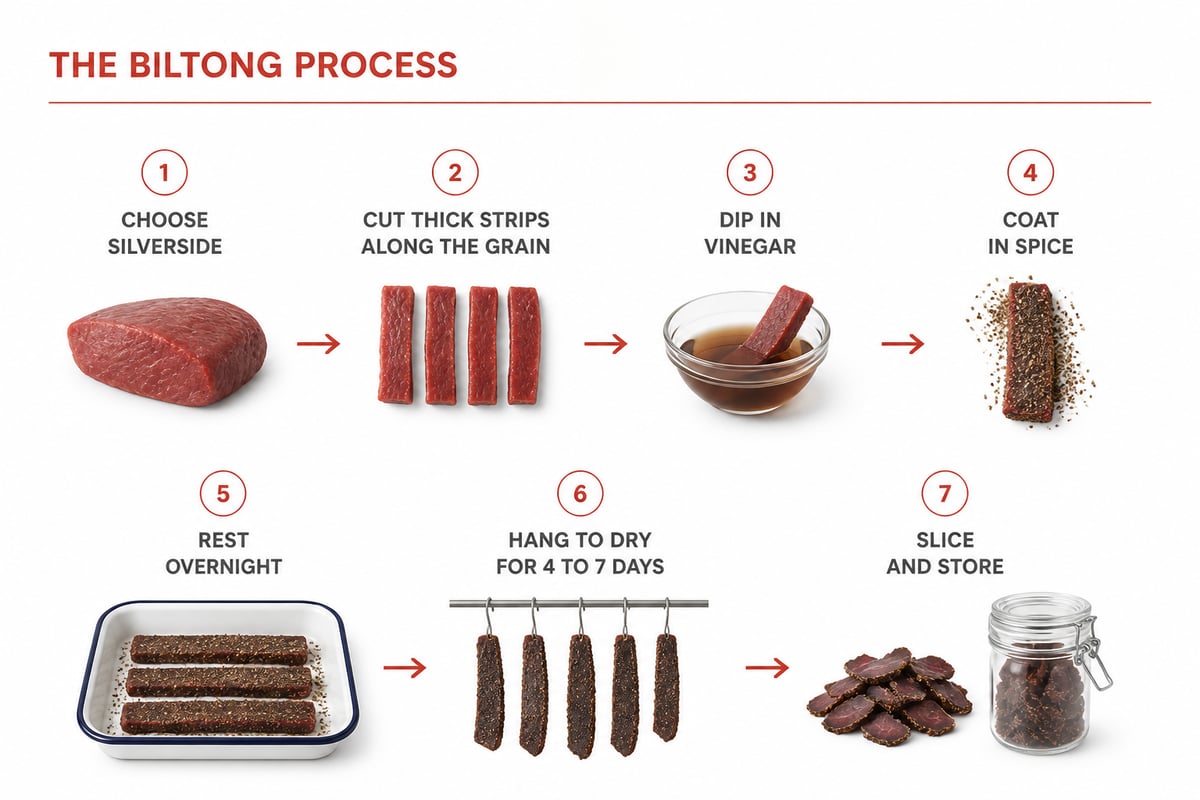
How to Make Biltong: Step by Step
Here is how to make biltong in seven steps, from trimming the beef to hanging it in the drying box.
- Trim and cut. Remove sinew and excess surface fat. Cut the beef along the grain into strips roughly 2 cm thick and 20 to 25 cm long. Cutting with the grain keeps the strips from falling apart on the hook and makes them easy to slice across later.
- Apply vinegar. Lay the strips in a tub and pour over about 30 to 50 ml of vinegar per kilogram, turning so every surface is coated. Vinegar lowers surface pH and helps the cure.
- Season. Sprinkle the spice mix over each side and rub it in. Use at least 30 g of salt per kilogram, either from your seasoning or added separately.
- Rest. Cover and refrigerate for 6 to 12 hours. Turn the strips once partway through so the spice is drawn evenly into the meat.
- Drain and pat. Take the strips out, let excess liquid drip off, and pat the surface lightly with paper towel. Do not rinse off the spice.
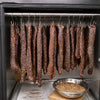
- Hang. Pierce one end of each strip with a hook, or thread them onto rods, and hang with a finger-width of space between each piece. Good airflow around every strip matters more than speed.
- Dry. Run a small fan or warm bulb in a ventilated box and wait. Drying time depends on humidity, strip thickness and how dry you like it, so check it daily.
For a deeper walkthrough of spice ratios, the Something From Home biltong recipe guide covers the flavour side in more detail.
Choosing a Drying Setup
A biltong dryer needs steady airflow, low humidity and no direct sun, and you can build one from a cardboard box or buy a purpose-made unit. Home-made boxes work well in dry rooms, and a small fan fixed at the top moves moist air out as it rises from the meat.
New Zealand's coastal humidity can slow drying in winter, so a gentle heat source such as a 40 watt bulb sometimes helps. Purpose-built dryers hold a stable temperature and take the guesswork out, and options such as the Mellerware Biltong King are popular with South Africans who make biltong all year. If you are weighing up the choices, the biltong maker guide compares what is available.
Online retailers such as Feedht.com also stock kitchen appliances, which can be useful if you are looking for a small extractor fan or a general-purpose drying accessory.
Food Safety: Getting the Cure and Dryness Right
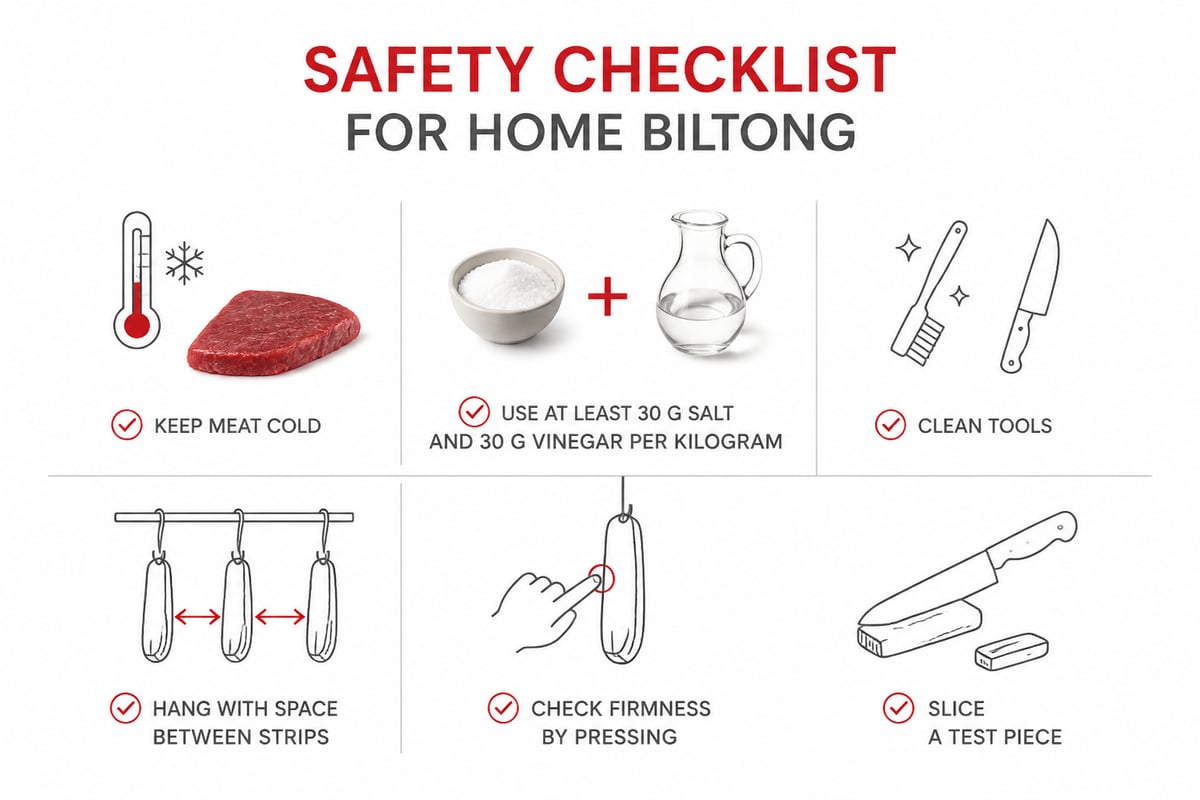
Safe biltong depends on enough salt and vinegar, clean handling and a final moisture level low enough to stop bacterial growth. New Zealand's Ministry for Primary Industries says biltong should reach a water activity below 0.85 to help prevent harmful microorganisms from growing or producing toxins.
The same MPI guide specifies minimum amounts per kilogram of meat: 30 g vinegar and 30 g salt. Keep to or above these amounts, and work with clean hands, boards and knives, keeping raw meat cold until it goes into the cure.
Because biltong is not cooked, it helps to understand the risks. The USDA's jerky safety page explains why raw meat can retain pathogens during dehydration, which is why strict hygiene and a proper cure matter so much. If you are cautious, or serving vulnerable people, an added heating step gives extra reassurance. The National Center for Home Food Preservation notes that strips cut ¼ inch thick or less can be heated for 10 minutes in an oven preheated to 275°F after drying. Be aware this is written for thin jerky strips, so traditional thick biltong is usually not given this step.
How to Tell When Biltong Is Ready
Biltong is ready when the outside is firm and dry, the centre has slight give, and a test slice looks dark red to brown rather than raw. The exact point is a matter of taste, which is why home makers vary so widely.
- Wet biltong: dried for a shorter time, soft and moist in the middle. Keep refrigerated and eat within a week or so.
- Medium: a firm outside and a slightly springy middle. This suits most people.
- Dry: dried for longer, hard right through and easy to store.
Press a strip between your fingers, then cut off one end and slice it. If it feels cold, sticky or shiny in the centre, give it another day or two. The NCHFP describes a bend test for jerky: after cooling, a test piece should crack but not break when bent. Thick biltong dries far more slowly than thin jerky, so treat that as a guide to texture only, not timing.
Slicing, Storing and Serving
Slice biltong thinly across the grain just before serving, and store it in paper or breathable bags rather than sealed plastic while it is still drying out. A sharp knife works, but a dedicated biltong cutter gives even slices every time, especially if you slice a lot.
For storage:
- Short term: hang in a cool, dry pantry or keep in paper bags for up to a week or two.
- Longer term: refrigerate in a breathable container, or freeze portions in vacuum bags for several months.
- Moisture: if condensation builds up, open the bag and let it air before resealing.
Biltong is at its best with a cold drink and good company. Serve it at a braai, scatter it over a salad, fold it into a cheese toastie or enjoy it straight from the bag. For heat-lovers, spice blends such as Freddy Hirsch Chilli Bite bring a different kick to the same method.
Common Mistakes to Avoid
Most failed batches come down to a handful of avoidable errors:
- Cutting against the grain: strips fall apart on the hook and dry unevenly.
- Skipping the vinegar or salt: this weakens the cure and raises safety risk.
- Overcrowding the box: poor airflow leaves wet spots that can spoil.
- Drying in humid conditions: the surface hardens while the middle stays damp. Add airflow or a little gentle warmth.
- Cutting too thin: strips under about 1 cm turn to jerky and lose that classic biltong chew.
- Sealing in plastic too soon: trapped moisture leads to mould.
Keep notes on your first few batches, including spice weight, drying days and room humidity, and adjust one thing at a time. The Something From Home FAQ-style walkthrough answers many of the questions that come up during early batches.
Is Biltong Healthy?
Biltong is a high-protein, low-carbohydrate snack, and it is generally a reasonable choice when eaten in moderation. It is made from lean beef, so it is a protein-rich option.
The caveat is sodium. Curing needs a decent amount of salt, so a heavy daily habit may not suit people watching their intake. Making your own lets you manage salt and sugar to the safe minimums rather than the amounts used in commercial packs.
FAQ
How long does home-made biltong last?
Fully dried biltong keeps for several weeks in a cool, dry place in a breathable bag, and longer in the fridge. For several months, vacuum seal portions and freeze them. Wetter biltong spoils sooner, so eat it within about a week.
Can I make biltong in a dehydrator or oven?
Yes, though the result is closer to jerky in texture. A dehydrator on its lowest setting or an oven with the door propped open can work if you have no drying box. Air-drying with a fan remains the traditional route and gives the classic flavour.
Why has my biltong gone mouldy?
Mould usually means the meat was too wet, airflow was poor or it was sealed in plastic before it was dry. Light white bloom on the surface is sometimes wiped off with vinegar, but any fuzzy green or black growth means the batch should be thrown out. Better airflow and thinner strips help prevent a repeat.
Your next step is to buy a whole piece of silverside, cut it along the grain and start your first batch this week. Something From Home is a South African shop and warehouse in New Zealand, based in Browns Bay, Auckland, with online delivery across New Zealand and Australia, and it stocks authentic South African brands for the whole job, from Freddy Hirsch Hunters Biltong Seasoning to hooks and cutters. Browse the full South African food store range and shop available now to get everything you need for home-made biltong in one order.